Laser
treatments
Explore what laser can do for brown spots, visible vessels, skin texture and more. Find the concern that matters to you below.
Your starting point
At a consultation, we look at your skin, your goals and the time you have for recovery. If a mark is new or changing, book a medical skin check before considering laser.
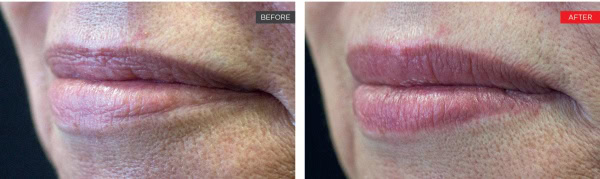
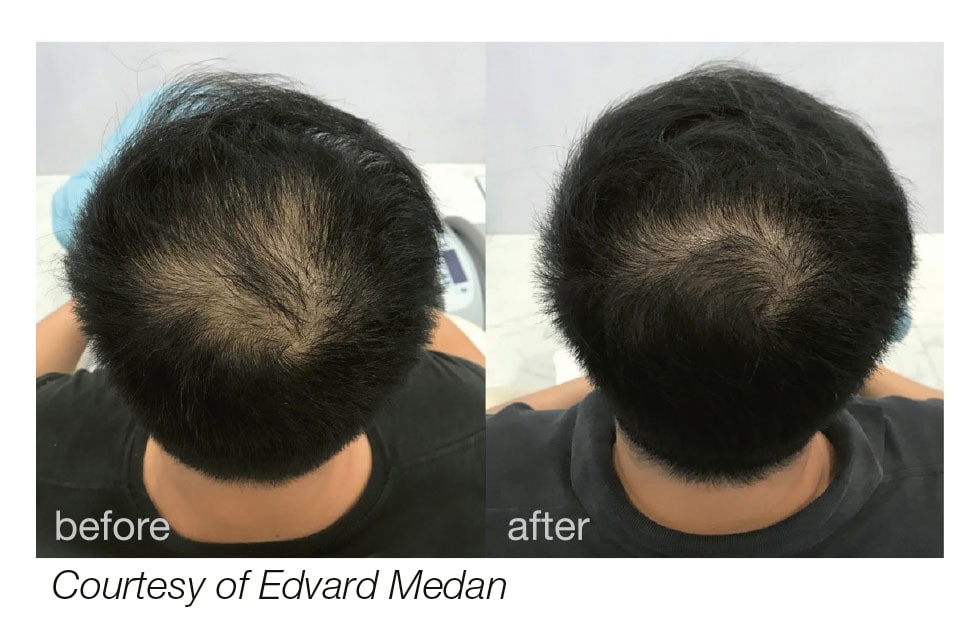
The following pages include published manufacturer comparisons. Each pair shows a before image on the left and an after image on the right. Lighting, angle, expression and follow-up timing can differ. Individual results vary.
(02) 9719 1600
Unit 12, 50 Victoria Road, Drummoyne NSW 2047
Pigmentation & age spots
A sun spot on the back of a hand may look much like a mark on the cheek, yet the two can need different care. We start by identifying the pigment and deciding whether laser is appropriate.
What it can improve
Selected flat, benign sun spots and freckles can fade, helping the surrounding skin look more even. A picosecond laser delivers very short pulses that pigment absorbs. The resulting pressure changes can break up pigment, which gradually clears as the skin renews.
What to expect
A targeted spot can feel like a quick snap and may darken or form a fine crust before fading. Skin tone, pigment depth and sun exposure all affect the result. For a series, the clinic may recommend 3–5 sessions about 4–6 weeks apart, with review between visits.
When a spot needs a closer look
Show us any new, changing, bleeding or irregular mark before cosmetic treatment. A clinician may recommend dermoscopy or biopsy. Melasma is a separate diagnosis and can recur or darken after laser. Sun protection also helps reduce the chance of new spots.
Before & after
Left: before / Right: after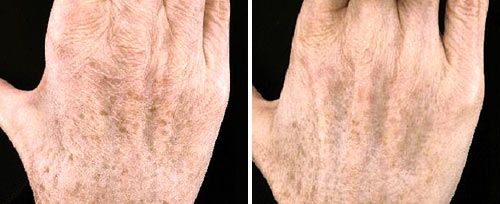
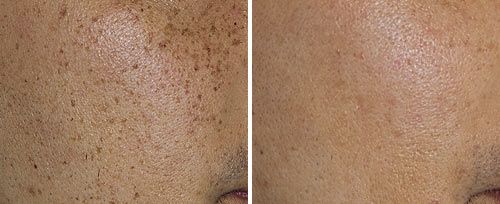
The gallery identifies these as pigment treatments. It does not specify a picosecond device for either example.
Leg veins & vascular spots
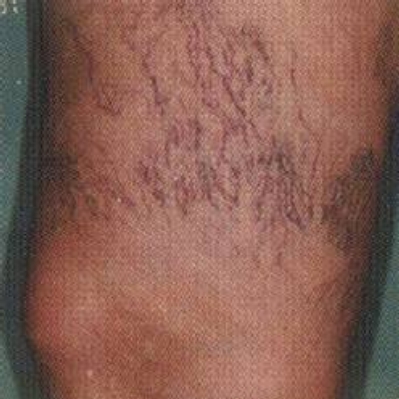
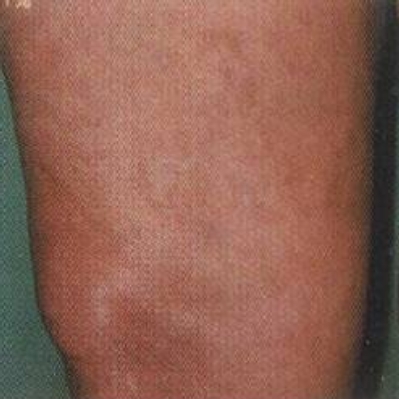
Small clusters of red, purple or blue vessels can be visible even through healthy skin. Laser can soften their appearance by treating selected vessels individually.
How vessels fade
A long-pulsed 1064 nm Nd:YAG laser sends light through the surface. Blood absorbs some of that light and warms the vessel wall. A successfully treated vessel gradually closes and becomes less visible over the following weeks.
Planning a course
The clinician checks the colour, size and depth of the vessels and your circulation history. Smaller leg vessels may be treated over 3–5 sessions roughly eight weeks apart. For larger veins, sclerotherapy or a vascular assessment may be more appropriate.
After treatment
Temporary redness, swelling, bruising or darkening along a vessel can occur. Burns, pigment shifts and scars are less common. Tell us about painful, swollen or bulging veins before booking cosmetic treatment so we can assess the underlying cause.
Before & after
Left: before / Right: after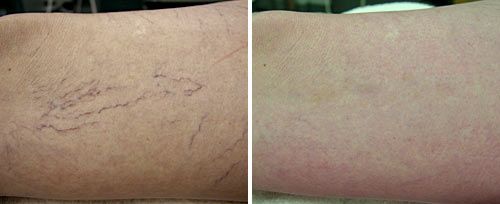
Facial capillaries & redness
A persistent thread of red near the nose or a small visible vessel on the cheek can be treated more precisely once we understand what is causing the colour.
What responds
Laser can target fixed, visible facial vessels and some small, localised vascular spots. If redness comes and goes with heat, stress or rosacea, the flushing may continue even when individual vessels fade. We discuss which part of the redness is likely to respond.
During a visit
The clinician selects a wavelength and pulse to match the vessel and your skin tone. Absorbed light heats the blood vessel, allowing it to gradually fade. Eye protection and cooling are used as appropriate. Some vessels need more than one visit.
Recovery and follow-up
A treated area may flush, swell, bruise or darken temporarily. Pigment changes or burns are possible. Gentle skin care and sun protection help during recovery. New vessels can develop over time, particularly where rosacea remains active.
Before & after
Left: before / Right: after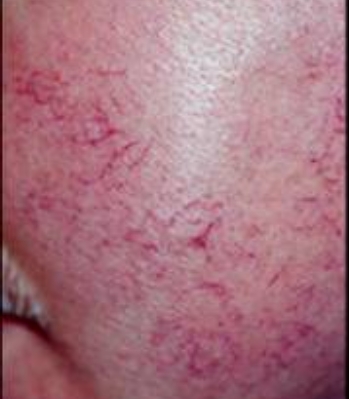
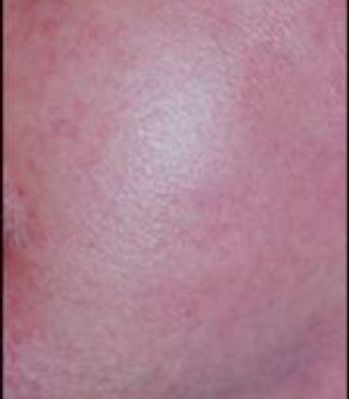
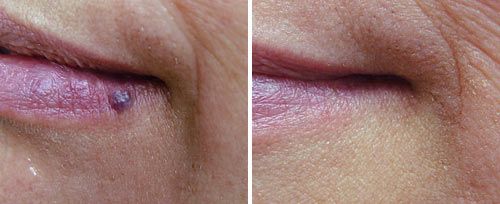
The second example shows a discrete vascular spot, a different concern from general facial flushing.
Four-step facial rejuvenation
Fine surface lines, uneven texture and mild laxity sit at different depths. This four-part treatment combines two wavelengths, working from the lining of the mouth through to the surface of the face.
The four steps
- Inside the mouth. Gentle Er:YAG heating of the inner cheeks aims to support firmness around the mouth.
- Targeted deeper heating. Short Nd:YAG pulses produce small zones of heat to address local texture and tone.
- Broad, gradual warming. Longer Nd:YAG pulses heat a wider area to support collagen remodelling.
- A light surface peel. Er:YAG removes a very thin surface layer to help smooth rough texture.
Planning and recovery
Results are usually gradual. The clinic may plan 4–8 visits about six weeks apart, adjusting the peel and course to your skin. Warmth, redness or flaking can follow. Pigment change is possible, especially after stronger passes. Pronounced laxity or deep folds may respond only modestly.
Before & after
Left: before / Right: after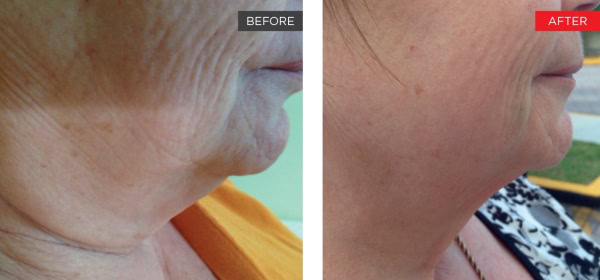
Lip smoothing & definition
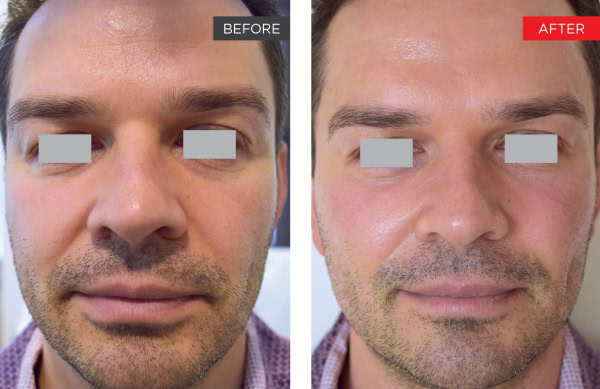
For someone who would like a subtle change in lip texture or outline, a series of gentle laser treatments offers an option without injectable filler.
How it works
Non-ablative Er:YAG pulses warm water in the tissue of the inner and outer lips. The repeated heating aims to encourage collagen remodelling. The change, when it occurs, tends to be subtle and builds over time.
What you may notice
A clinician treats the lip surface and inner lip in a series of passes. The lips may feel warm, dry or tender afterwards. Early fullness can be swelling. The more useful time to judge the change in texture or definition is after it settles.
Planning your visits
The manufacturer describes a course of around four visits spaced about a month apart. Your clinician will consider the starting shape of your lips and the change you have in mind. Mention previous cold sores before treatment, as laser can trigger a flare.
Before & after
Left: before / Right: after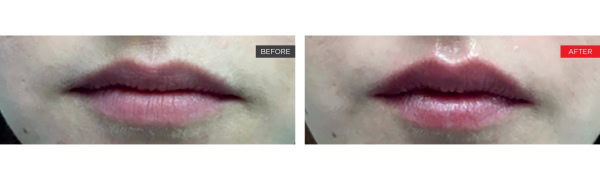
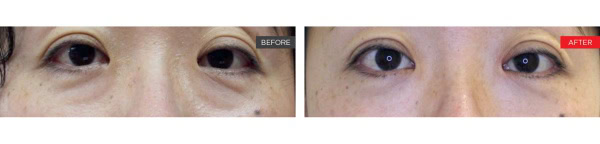
Eye-area skin tightening
Fine creasing and delicate, crepey skin around the eyes can change how the area catches light. This treatment focuses on the quality and firmness of the eyelid skin.
How it works
Gentle, non-ablative Er:YAG pulses warm the skin in a controlled sequence. Heat can produce some initial tightening and stimulate slower collagen remodelling. Changes in texture generally become easier to judge over the following months.
Which concerns fit
Skin laxity and surface lines may improve. Prominent fat pads, hollows and shadows can have other causes. At consultation we look at the area at rest and in movement and discuss what this approach could realistically change.
Visits and recovery
The clinic may recommend 5–6 sessions about 6–8 weeks apart. Eye-specific protection is essential during treatment. Temporary redness, puffiness and fine peeling can follow. Tell us about eye conditions, recent eye surgery or irritation before treatment.
Before & after
Left: before / Right: after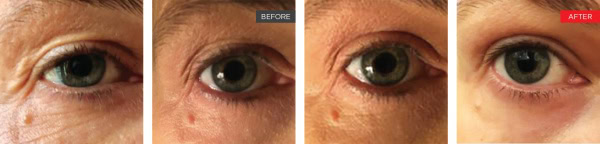
Body contouring & skin tightening
If your weight is stable but a small area of fullness or loose skin bothers you, laser body contouring may offer a modest change in the outline of that area.
Two stages of treatment
Long-pulsed 1064 nm Nd:YAG light first warms deeper tissue in a selected area. A second, gentler Er:YAG pass heats the surface to encourage skin tightening. The aim is a local change in contour and firmness without an incision.
Choosing an area
The abdomen, flanks and other selected areas can be assessed. Skin elasticity and the amount and location of tissue affect suitability. A course may involve several visits, with measurements or consistent photographs over time. It is a contour treatment, not a way to lose weight.
Recovery and limits
Warmth, tenderness, redness or swelling can occur. Burns and pigment changes are possible. Results can be subtle or temporary, and changes in weight can alter the contour. Tell your clinician about implants, scars or previous surgery in the area.
Before & after
Left: before / Right: after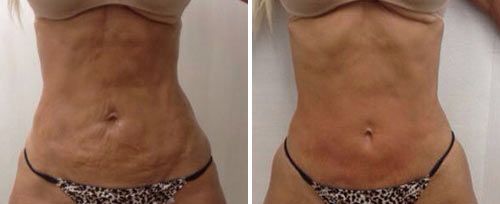
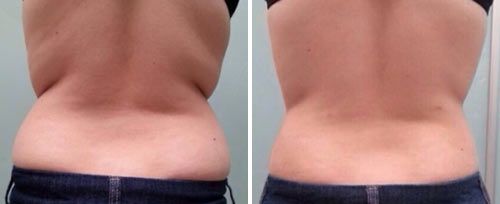
Skin resurfacing for lines & texture
Rough sun-exposed skin, fine etched lines and selected shallow scars can benefit from resurfacing. Your available recovery time helps determine how light or intensive a treatment to consider.
Surface renewal
Er:YAG at 2940 nm is strongly absorbed by water at the skin surface. A controlled pass can remove a thin layer. Fractional treatment leaves bridges of untreated skin between small treatment columns. Full-field treatment covers the whole selected surface.
What changes over time
As the skin closes and renews, texture can feel smoother. Collagen remodelling continues afterwards. Superficial lines generally respond more readily than deep folds. Different scars can need different approaches or a combination plan.
Planning around recovery
Lighter sessions can be staged weeks apart. A stronger treatment may need one to two weeks or more for initial healing, and redness can last longer. Follow the wound-care plan. Infection, cold sore reactivation, pigment change and scarring are possible.
Before & after
Left: before / Right: after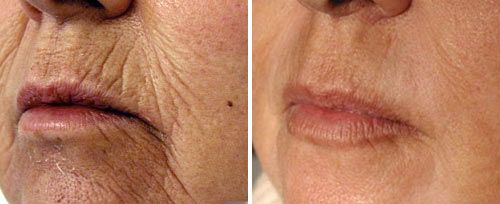
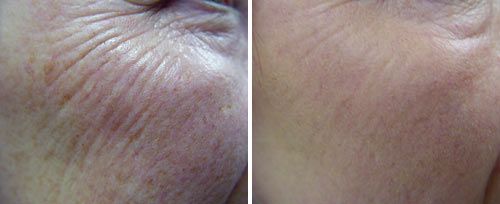
Scalp treatment for thinning hair
A widening part or thinning crown is a reason to establish the cause first. For selected people with pattern hair loss, non-ablative scalp laser may be considered alongside other treatment options.
What the laser does
A gentle Er:YAG pulse sequence warms the scalp without removing its surface. Researchers are investigating whether this can support activity in existing follicles. It cannot replace follicles already destroyed by scarring.
What we know
A small observational study of 32 adults with pattern hair loss used six visits at two-week intervals. Some participants showed improved hair appearance. Without an untreated comparison group or longer follow-up, the size and durability of the benefit remain uncertain.
How to track a change
Record the part or crown under consistent light, at the same angle and with similar hair length. A series can be reviewed over months. Tell us about sudden shedding, patchy loss, scalp pain or scaling so an underlying condition can be investigated.
Before & after
Left: before / Right: after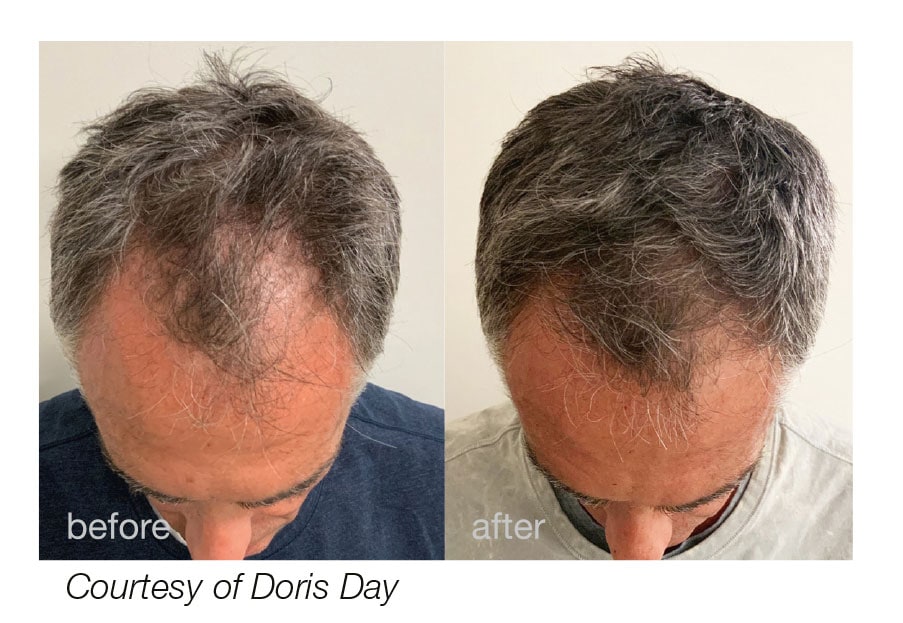
Snoring treatment
Snoring can come from soft tissues vibrating as air passes through the throat during sleep. For selected adults, reducing vibration in the soft palate may make snoring quieter.
What happens during treatment
Non-ablative Er:YAG pulses gently heat selected tissue in the soft palate and throat through the open mouth. The aim is to stiffen the vibrating tissue. A course involves several visits. The throat may feel dry, scratchy or sore afterwards.
How we judge a benefit
In a small sham-controlled trial of 40 selected adults, a three-session course improved partner-rated snoring at three months. A partner’s observations and changes in sleep symptoms are more informative than a photograph of the palate. Longer-term benefit can vary.
When to seek a sleep assessment
Witnessed pauses in breathing, gasping at night or daytime sleepiness warrant medical assessment for obstructive sleep apnoea. Continue prescribed CPAP or other sleep treatment unless your treating clinician advises a change.
Before & after
Left: before / Right: after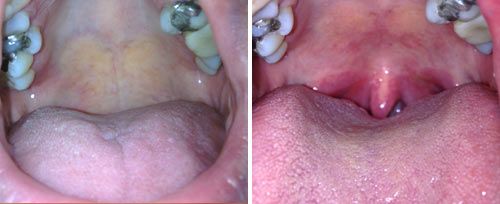
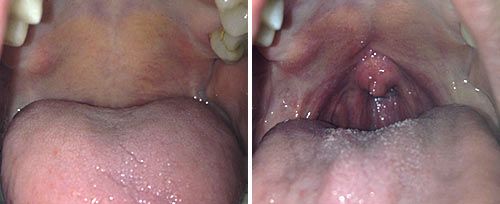
These photos show anatomy. A photograph cannot measure snoring volume, airflow or sleep apnoea.